
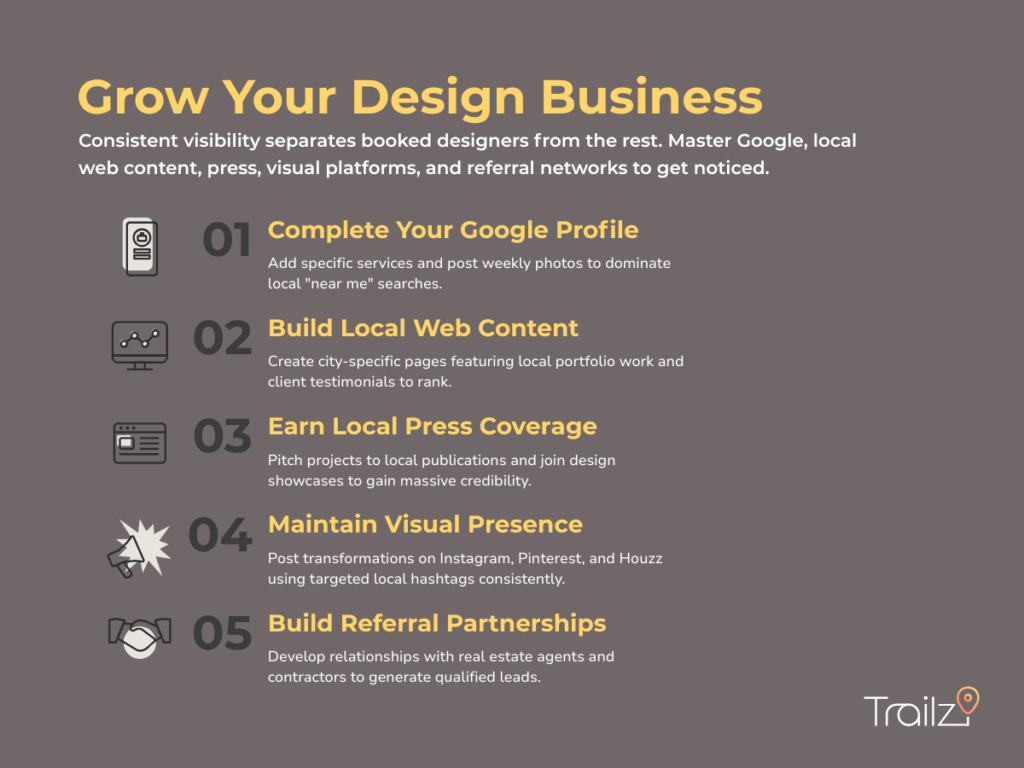
Interior design marketing includes profile optimization, location-specific content, local press coverage, visual platforms, and referral partnerships.
Promoting an interior design business is demanding. The requirement to remain visible forces designers to plan engagement on many different platforms. Homeowners hire the name that keeps showing up when they ask their agent for a recommendation, when they search Google, when they read local home features, and when they scroll Pinterest. That consistent visibility separates designers who stay booked from those wondering why the phone doesn’t ring.
How Does Your Google Business Profile Control Map Pack Rankings?
A Google Business Profile controls whether an interior designer appears in the top three map results when someone searches “interior designer near me.” A complete profile includes service areas, hours, categories, and specific services like “residential interior design,” “kitchen remodeling,” and “condo staging.”
High-quality project photos uploaded weekly keep the profile active. Client reviews that mention the city and project type carry more local ranking weight. The services section is essentially free keyword space that Google reads directly.
Why Should You Build Location-Specific Website Content for Each Service Area?
Individual service pages for each city or neighborhood the designer works in help build local relevance. Each page benefits from portfolio photos from that specific area, local client testimonials, and details about regional architectural styles. Blog posts about local projects and city-specific design challenges reinforce the same signals.
The designers who rank consistently treat each service area as its own market.
How Does Local Press Coverage Position You as the City Expert?
Getting featured in local publications builds credibility that advertising can’t buy. Pitching completed projects to city lifestyle magazines and design blogs opens the door to coverage. Guest articles on regional design trends give editors a reason to publish a designer’s name.
Local editors respond to stories rooted in the community, not generic before-and-afters.
Why Should You Maintain Active Visual Platforms Where Homeowners Discover Design Ideas?
Instagram, Pinterest, and Houzz help potential clients discover a designer’s style before they ever make contact. Transformation photos and Reels posted on Instagram with local hashtags build steady local visibility. Pinterest boards organized by room type, with images linking back to the designer’s website, give homeowners a discovery path.
Maintain an active Houzz profile where homeowners research designers.
How Do Strategic Referral Partnerships Generate Qualified Leads?
Relationships with professionals who interact with the same target clients generate the most qualified leads. Real estate agents who work with buyers wanting to customize homes. Contractors who need designers for new construction. Furniture showrooms serving the same audience.
The designers who stay busy aren’t always the most talented. They’re the ones agents think of first when a buyer asks for a recommendation.
How Does Local Design Authority Come From Stacking Proof Signals?
The designers who dominate their markets stack proof signals across every platform where homeowners look for help. Google Business Profile rankings improve with fresh photos and review velocity. Press features build credibility. Visual platforms create brand recognition. Referral partnerships generate projects.
Each signal reinforces the others until one designer becomes the obvious choice in the market.