


You might already have a blog on your website. Maybe a few posts about what your business offers, a community event you supported, or a helpful tip you wanted to share. But you’re still wondering: does any of that actually help you rank higher in Google when people nearby search for what you do?
Nearly half of all Google searches—46 percent—are made with location-based intent. That matters if you want people in your area to find your business online. When blog posts are written with purpose, they can strengthen your visibility in search results.
They give Google more relevant content to connect with your region, help you appear in the right searches, and build trust with potential customers who are close to home.
In this blog, we’ll walk through how blogging can improve your visibility in area-based search and what kinds of posts make the biggest difference.
How Blog Posts Help Google Understand Your Local Expertise
Do blog posts affect local SEO? Yes, they do. A well-written blog helps search engines understand what your business does and where it’s located. It also shows that you’re active, relevant, and connected to your community.
Each new post gives Google more context about your business. If you write about local topics, mention nearby areas, or highlight community insights, your blog signals that your business is part of that location. Over time, this makes it easier for people in your area to find you when they search for related services.
Here’s how blog content supports stronger visibility:
- It introduces new area-specific topics that reinforce your business focus.
- It attracts helpful links from other trusted community-based sources.
- It gives search engines more reasons to trust your regional expertise.
Do blog posts affect local SEO? Absolutely. They can strengthen your visibility, help you build local trust, and bring more visitors to your site.
To learn more about optimizing content that performs well in your area, read this guide on the benefits of local SEO or explore examples of AI in marketing for inspiration on how automation can make content creation easier.
Ways Blog Content Improves Local Search Visibility
If your business wants to show up in more search results, blog content can help send the right signals. A consistent posting schedule not only shows Google that your site is active—it also helps clarify where you operate and who you serve.
Here are four practical ways blog content supports local search visibility:
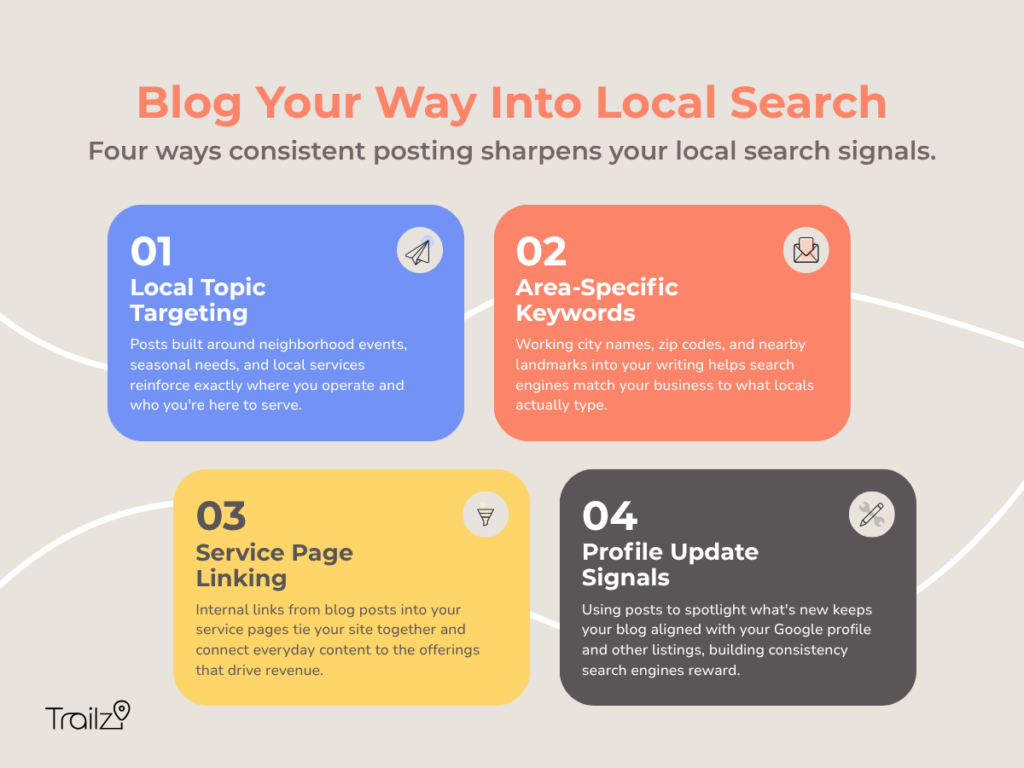
1. Targeting Local Topics
Write about events, services, or seasonal issues specific to your city or neighborhood. These location-aware posts help reinforce your presence in the area and improve local search visibility by showing relevance to nearby readers.
2. Using Area-Specific Keywords
Naturally mention the names of the cities, zip codes, or landmarks you serve. This makes it easier for search engines to connect your business to local queries, which improves local search visibility for users in your region.
3. Linking to Service Pages
Add helpful internal links in your blog posts to guide readers toward key services. Doing this strengthens your site structure and supports local search visibility by connecting blog content with your core offerings.
4. Updating Your Business Profile Contextually
Use your blog to highlight what’s new or evolving in your business. These updates can align with your Google Business Profile and other listings, creating consistency that improves local search visibility across platforms.
Smart blogging fits into a broader local SEO strategy. For help refining your content approach, read this guide to content strategy for your website, or see how a website redesign can support better visibility across all channels.
Once you understand how blog content supports visibility, the next step is knowing which visual elements strengthen that local connection even further.
Adding Local Images and Videos
Photos and videos from your area make blog posts feel authentic while sending location signals to search engines. Visual content that features recognizable places, local events, or your team in the neighborhood shows exactly where your business operates.
Google reads image data and alt text. When you reference local landmarks or area names, it strengthens the connection between your content and nearby searches.
Ways to use local visuals effectively:
- Feature familiar locations – Include photos of your storefront, nearby parks, community centers, or local landmarks.
- Cover area events – Share images from festivals, seasonal gatherings, or charity drives in your community.
- Write location-specific alt text – Be precise in descriptions, mentioning city names and recognizable places (example: “Dilworth coffee shop patio” instead of “outdoor seating”).
- Source locally – Ask team members to capture photos during regular activities, or work with a local photographer.
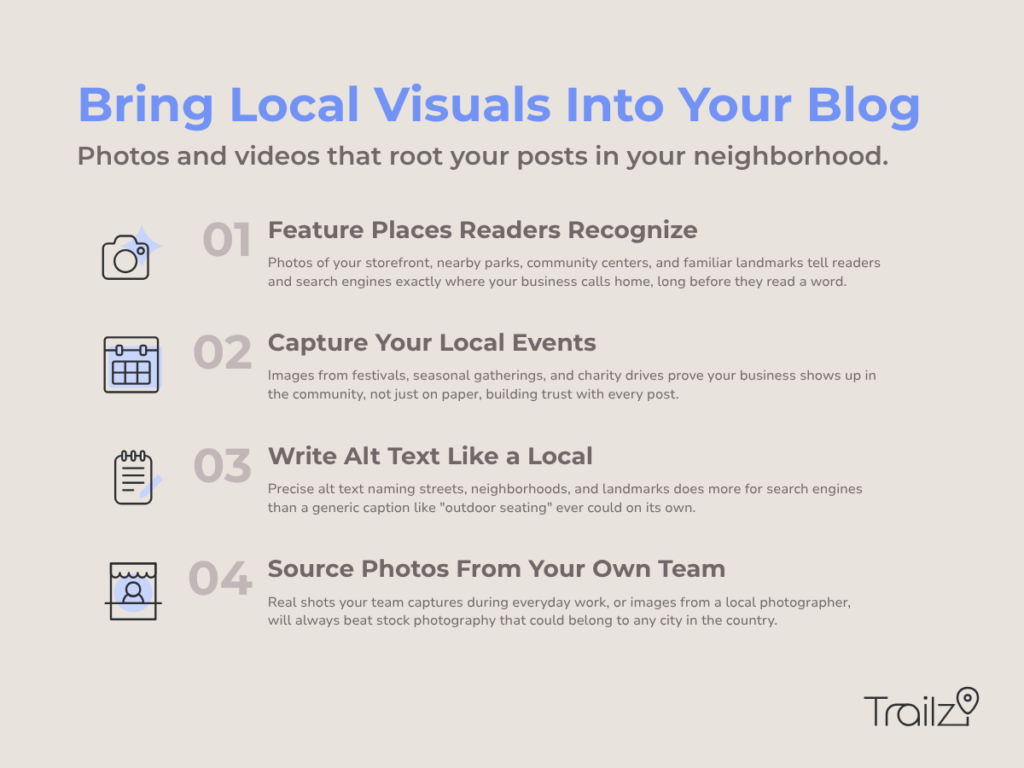
Local images make posts more relatable while helping search engines associate your business with your region. They work harder than stock photos ever will.
Common Blogging Mistakes That Limit Local SEO Impact
Many small businesses start blogging with good intentions, but overlook details that hurt SEO impact. A few simple mistakes can make even well-written posts invisible to local customers.
Here are the most common issues to watch for:
Mistake #1: Writing without a clear geographic focus
General topics don’t help area-based search. When posts don’t mention your city, region, or nearby needs, Google can’t tell which audience your content serves. That reduces your SEO impact where it matters most—locally.
Mistake #2: Ignoring your Google Business Profile
Blogging and your profile should work together. When you fail to link posts or share updates through your Google listing, you lose easy visibility for nearby searches. That missed connection can reduce your overall SEO impact.
Mistake #3: Skipping backlinks and internal links
Every blog should include links to other pages on your site or trusted sources. These links signal credibility and improve SEO impact over time.
Mistake #4: Posting only about products or services
Blogs help build trust, not just promote sales. Include educational content, FAQs, and helpful tips that show you understand your audience’s challenges. Doing so creates long-term value and supports stronger SEO impact through consistent relevance.
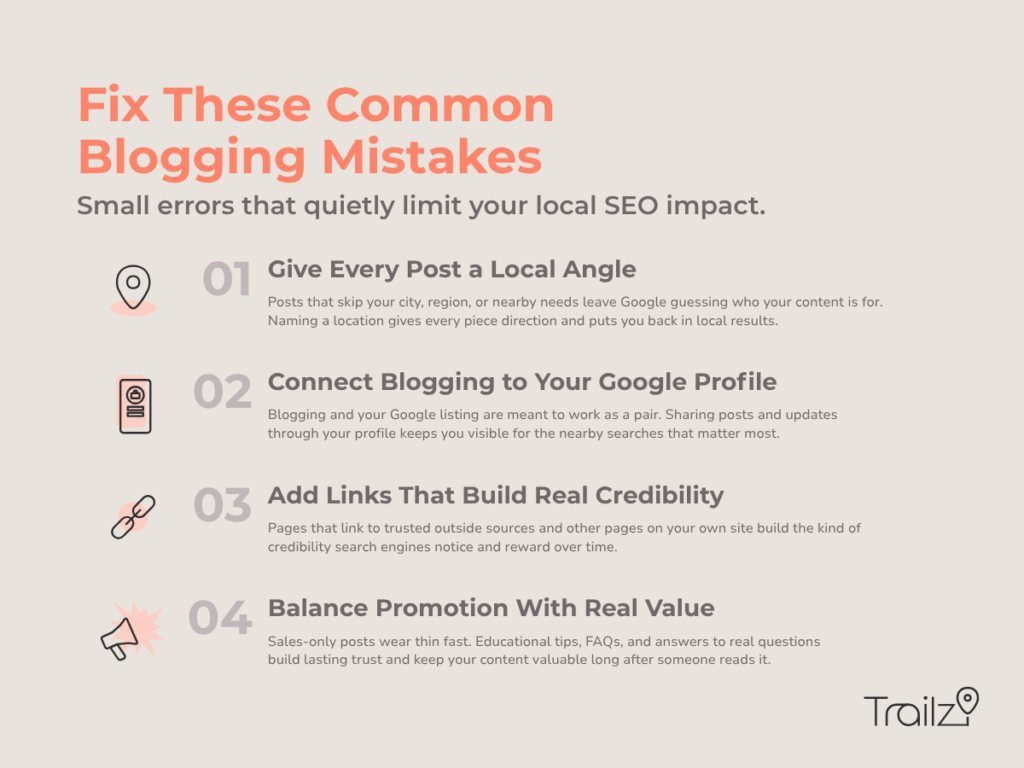
Avoiding these mistakes can help businesses improve their SEO impact and connect with potential customers who are ready to buy. For more ways to strengthen your local SEO impact, read this guide on getting found on Google or explore DIY marketing strategies to build consistent visibility.
Avoiding these mistakes sets a solid foundation, but turning that foundation into measurable results requires a structured approach to planning and tracking.
Building an Effective Content Plan for Local SEO
Random posting rarely moves rankings. A clear content plan focuses your effort on topics that matter to your audience and support your visibility goals.
Start with these steps:
- Identify content gaps – Review what you’ve published and note missing topics relevant to your community
- Research local search terms – Use tools like Google Keyword Planner to find phrases people in your area actually type
- Match topics to audience needs – Prioritize content that addresses challenges your local customers face
- Create a posting schedule – Consistency builds momentum; plan when you’ll publish to stay accountable
Deliberate planning ensures every post serves a purpose. When you tailor content to local interests and real customer questions, both search engines and nearby readers see your business as a trusted resource.
A strong content plan guides what you write, but tracking your results shows whether that plan actually works.
Track and Measure Your Blog’s Local SEO Impact
Data reveals what your blog accomplishes. Without tracking, you’re guessing whether your content connects with nearby searchers or drives actual business results.
Focus on these key signals:
- Local search traffic – Monitor visits from searches tied to your city or region using Google Analytics
- Engagement patterns – Track page views, time on site, and interactions that show local readers find value
- Keyword movement – Check whether your posts rank higher for targeted local phrases over time
- Conversion actions – Measure contact forms, calls, and other lead-generation events tied to blog traffic
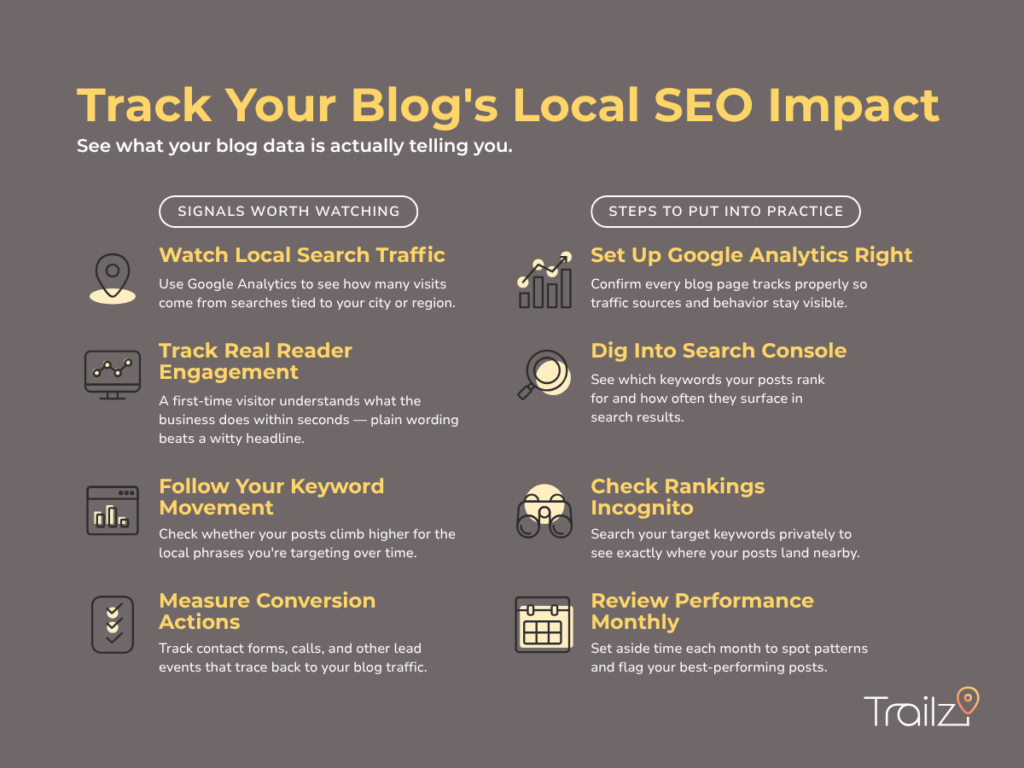
Practical measurement steps:
- Connect Google Analytics – Verify every blog page tracks properly so you can monitor traffic sources and user behavior
- Review Search Console data – Check which keywords your posts rank for and how often pages appear in search results
- Monitor local rankings – Search for target keywords in incognito mode to see where your posts appear for nearby searches
- Schedule monthly reviews – Set aside time to analyze performance, spot patterns, and identify your best-performing content
Regular reviews show which efforts connect with your local audience and where adjustments might help. This ongoing measurement turns blogging from an activity into strategy grounded in results instead of assumptions.
How to Write Blogs That Actually Boost Local Rankings
If you want your business to show up in search results, you need to write blogs that focus on more than just general information. What helps is content that speaks directly to your audience, your services, and the places you serve.
Try these strategies to improve local visibility:
Tip #1: Include Specific Geographic Terms
Mention neighborhoods, service areas, and events happening in your area. This helps search engines connect your content to queries. When you write blogs using local references, your content feels more relevant and timely.
Tip #2: Use Long-tail Keywords that Match How Real People Search
Instead of “plumber,” try “emergency plumber in Charlotte.” These phrases are easier to rank for and better match what your potential customers type into search. Make sure you write blogs with these longer phrases naturally woven into helpful answers.
Tip #3: Answer Real Questions with High-quality Content
Write blogs that explain your services, solve problems, or answer common FAQs. When you provide helpful information, it improves your online authority and increases the chances of showing up in more searches.
Tip #4: Link to Other Useful Pages
Internal links can help guide readers and show search engines that your site is well structured whenever you write blogs. You also need to make sure your business name and contact details are completely filled out across your site. As you write blogs, look for ways to link between topics, services, and related resources.
When you consistently write blogs that focus on your audience and local relevance, it becomes easier to connect with the right people at the right time. If you’re unsure where to begin, this guide on turning blog readers into customers is a helpful place to start.
Promoting Your Blog Content to Local Audiences
Publishing solid content is half the work. Getting it in front of local readers requires deliberate promotion through channels where your community already gathers.
Effective ways to share your posts:
- Join local online groups – Participate in neighborhood Facebook groups or Nextdoor communities, sharing relevant posts when they add value to discussions
- Engage on community forums – Contribute to city subreddits or local message boards with helpful advice, linking to your blog when appropriate
- Partner with nearby businesses – Cross-promote content through guest posts or by featuring each other’s work
- Build an email list – Send regular newsletters highlighting posts on topics relevant to your local subscribers
- Connect with community voices – Ask local influencers or leaders to share content that benefits their audience
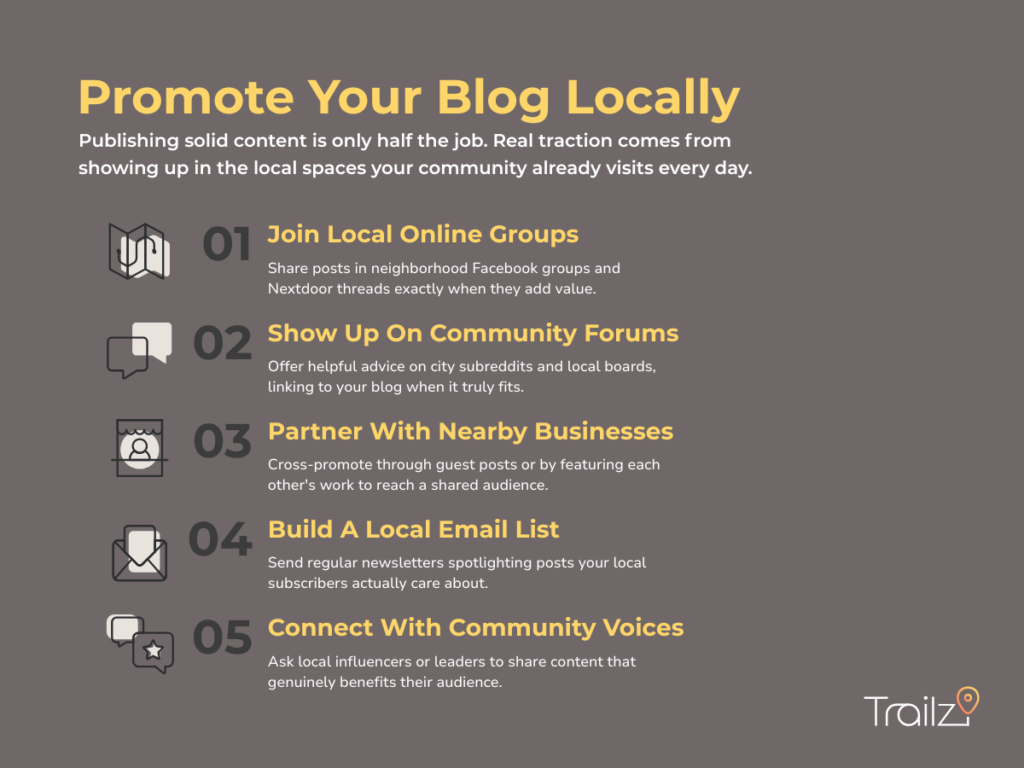
Authentic engagement beats promotional blasts. Focus on adding value to local conversations, and your content will naturally reach the people who need it.
You can also explore how blogging works as a long-term marketing tool. Trailzi helps many business owners create focused blog content that supports visibility and leads to growth.
Get More from Every Blog You Publish
It’s easy to feel like you’re writing into the void when your posts never seem to get noticed. Many business owners face the same challenge — putting in the effort without seeing results in search.
That’s where Trailzi comes in. We help you plan, write, and optimize blog content that expands your reach, highlights your expertise, and builds brand visibility where it matters most.
Start turning your blog into a growth tool with a focused content strategy. Learn more about Trailzi’s approach today.