Hotel marketing strategy includes Google Business Profile optimization, review management, local SEO, and content showcasing the experience.
Travelers today are looking for more than a place to sleep. They’re booking an experience. They want to know what it feels like to stay at the property, what’s within walking distance, and whether the hotel is connected to the local scene. Hotels that lean into the destination tend to book more rooms than those focused only on amenities and pricing.
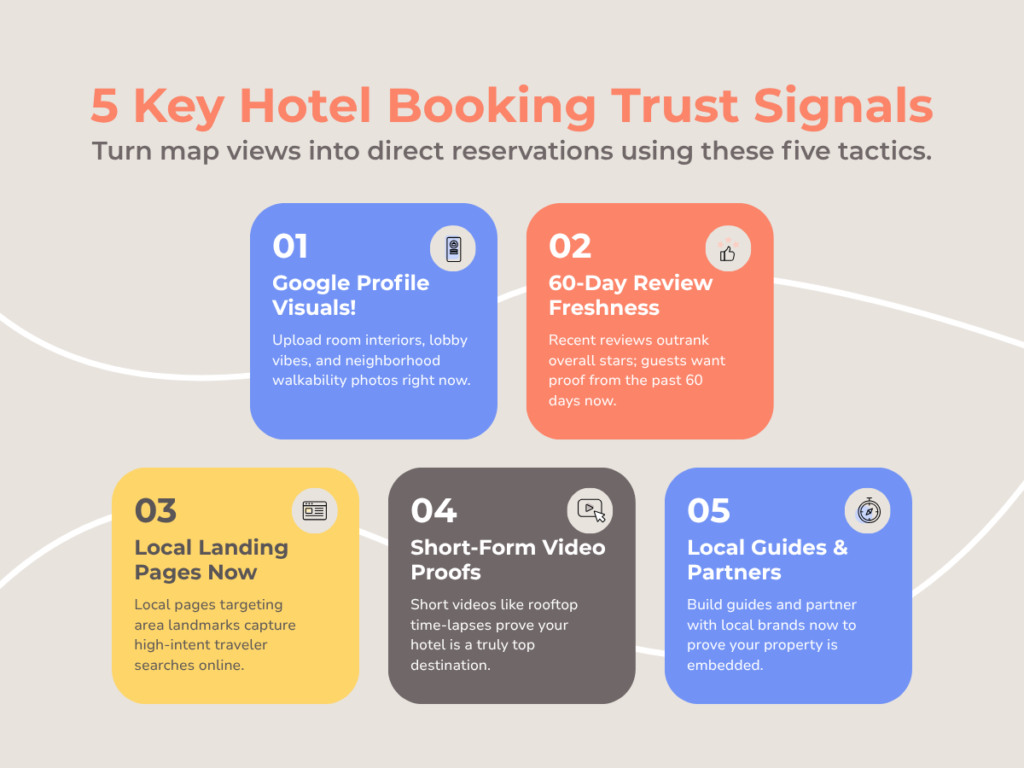
How Does Your Google Business Profile Control First Impressions and Local Rankings?
A hotel’s Google Business Profile often appears alongside the website in most local searches. And GBP photos directly influence booking decisions:
- Room interiors showing actual space and lighting
- Amenities that define the experience
- The surrounding neighborhood and walkability
- Lobby and common areas that communicate vibe
Attributes like “Rooftop Bar” or “Pet-Friendly” filter properties for relevant traveler searches. Posts about seasonal packages or neighborhood events signal that the property is actively managed. Active profile management is one of the signals Google factors into local rankings.
Why Does a Hotel Website Need to Convert Local Search Traffic?
Most travelers compare rates on Expedia and Booking.com, then shift to direct booking when the hotel website is trustworthy and easy to use. Local landing pages targeting “hotels near [landmark]” or “where to stay in [neighborhood]” capture high-intent searches.
Blog content like “Weekend Guide to the Area” or “Best Coffee Shops Within Walking Distance” positions the property as an insider source.
How Do Recent Reviews Outrank Overall Star Ratings?
Travelers often skim the overall score and focus on reviews from the past 60 days. A hotel with 4.3 stars and 50 recent reviews gets more bookings than one with 4.5 stars and outdated feedback.
Responding to every review shows the hotel team is engaged. When guests mention specifics like “walkable to downtown restaurants” or “rooftop bar with incredible sunsets,” those phrases become searchable proof that reinforces the hotel’s marketing claims.
How Does a Hotel Connect Its Property to the Destination?
Google ranks hotels based on how well they align with traveler intent and how much local proof they demonstrate. When the Google Business Profile, website, reviews, social media, and local partnerships all point to the same message, the hotel gains trust and local relevance. And those help it rank higher and book more clients.