
Tourism businesses market themselves through Google visibility, traveler reviews, destination content, and consistent social media exposure.
Tourism marketing works differently from most local industries because travelers usually research long before making a booking decision. A family planning a weekend in Asheville, a couple searching for snorkeling tours in Key Largo, or a group comparing wine tours in Napa often look at dozens of businesses before narrowing the list.
The tourism companies that stay visible through that process usually build marketing systems around search visibility, reviews, local partnerships, and repeat exposure across multiple platforms.
Why Does Local Search Matter for Tourism Businesses?
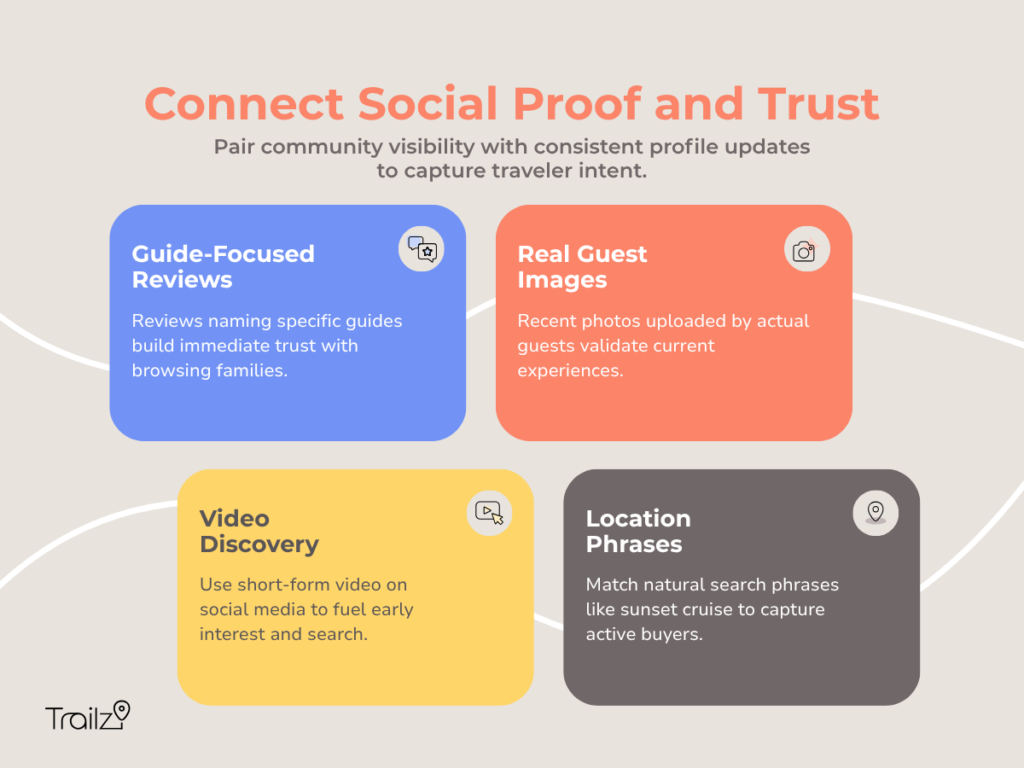
Most tourism searches begin with location-based intent. Travelers search phrases tied to destinations, neighborhoods, activities, and timing rather than brand names.
Examples include:
- sunset cruise in Clearwater
- things to do near Gatlinburg
- guided food tour in Charleston
- ATV rentals in Sedona
That makes Google Business Profile optimization one of the strongest visibility drivers for tourism businesses. Tour operators, charter companies, museums, visitor attractions, and activity providers that consistently appear in the Map Pack usually share several traits:
- High review velocity during peak travel seasons
- Recent photo uploads showing current experiences
- Reviews mentioning activity type and destination names
- Accurate categories and service descriptions
- Consistent updates tied to events, seasons, or promotions
Tourism businesses often lose rankings when the profile becomes inactive during slower seasons. Listings with outdated photos from two summers ago or reviews that stopped three months earlier tend to lose visibility once nearby competitors increase activity.
What Type of Content Helps Tourism Businesses Attract Travelers?
Generic promotional copy usually struggles because most tourism markets are crowded with businesses using the same language. Phrases like “unforgettable experience” or “world-class service” rarely separate one business from ten similar listings nearby.
The stronger approach focuses on specifics tied to the actual destination.
A kayaking company in Bend might publish content around:
- best river conditions during late summer
- wildlife commonly seen during morning tours
- differences between beginner and advanced routes
- weather changes during the spring season
That kind of content strengthens relevance signals while also helping travelers make booking decisions.
How Important Are Reviews for a Tourism Business?
A roofing company may rely on repeat customers and referrals within the same city. Tourism businesses depend heavily on strangers making fast trust decisions while comparing multiple options at once.
The reviews that tend to influence bookings most include:
- Specific mentions of guides, staff members, or tour leaders
- Details about the destination or route
- Photos from actual guests
- Recent timestamps during the current travel season
- Mentions of organization, safety, or communication
Roughly 74% of local searchers make decisions within 24 hours, and tourism searches often move even faster when travelers are already inside the destination market.
Review recency also matters more in tourism than many owners expect. Travelers looking at jeep tours in Moab or whale watching in Monterey usually trust businesses with visible activity from the current season over listings that appear dormant.
Which Marketing Channels Work Best for Tourism Businesses?
Google captures high-intent searches from travelers actively planning activities. Instagram, TikTok, Pinterest, and YouTube often create the earlier interest that eventually turns into those searches.
The strongest tourism brands usually maintain:
- A Google Business Profile with consistent updates
- Short-form video showing real guest experiences
- Destination-focused website pages
- Seasonal content tied to local travel patterns
- Partnerships with nearby hotels, restaurants, or venues
Partnerships are especially important in tourism-heavy areas.
How Do Tourism Businesses Stay Visible During Slow Seasons?
Seasonality affects nearly every tourism market differently. Beach towns often slow during colder months. Mountain destinations may peak during ski season and flatten afterward. Event-driven cities can see dramatic traffic shifts between festival weekends and quieter periods.
The businesses that maintain visibility year-round usually continue publishing fresh signals even when bookings temporarily slow.
That may include:
- Posting off-season destination updates
- Uploading new customer photos
- Responding to reviews consistently
- Publishing seasonal travel guides
- Updating service pages around upcoming events
Tourism visibility tends to compound over time. Businesses that stay active between peak seasons usually enter the next travel cycle with stronger rankings, fresher reviews, and more local authority already established.