Restaurant marketing strategies include profile optimization, local SEO, automated review systems, social media, and SMS loyalty programs.
Empty Monday and Tuesday seats hurt a restaurant’s bottom line. A lot of restaurants pour their energy into weekends and treat weeknights like a lost cause. Restaurants that stay busy seven days a week tend to combine retention systems with local tactics that turn slow nights into profitable ones.
How Does a Google Business Profile Drive Same-Day Searches?
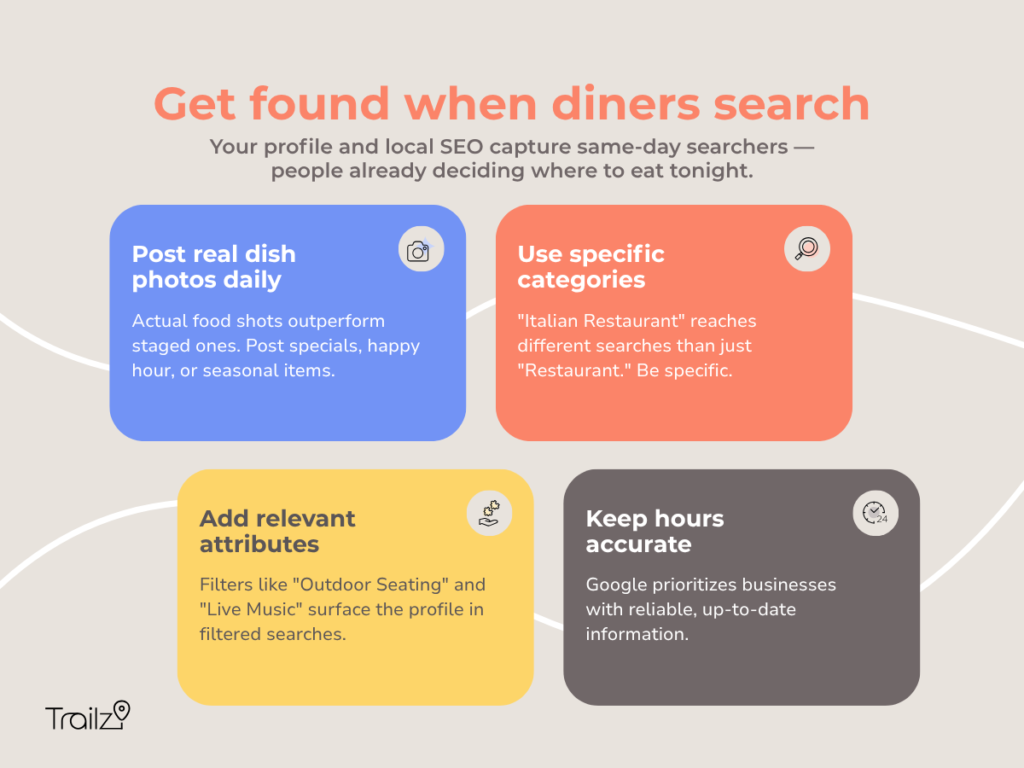
When someone searches “Italian restaurant open now” or “where to eat near me,” the profile they land on needs current content. Photos of actual dishes perform better than professionally staged shots. Daily posts about specials, happy hour times, or seasonal items signal that the restaurant is actively managed.
Categories need to be specific. “Italian Restaurant” appears in different searches than “Restaurant.”Attributes like “Outdoor Seating” or “Live Music” help the restaurant show up when people filter results. Accurate hours matter because Google prioritizes businesses with reliable information.
Why Does Local SEO Bring in Ready-to-Book Diners?
Landing pages targeting searches like “best tacos in [neighborhood]” or “date night restaurants near [landmark]” reach people ready to make reservations. Blog posts like “Where Locals Actually Eat in [Area]” position the restaurant as the go-to choice.
When the website, Google profile, and social media all mention the same neighborhoods and landmarks, Google recognizes the restaurant serves that area and ranks it higher in local searches.
How Do Recent Reviews Influence Booking Decisions?
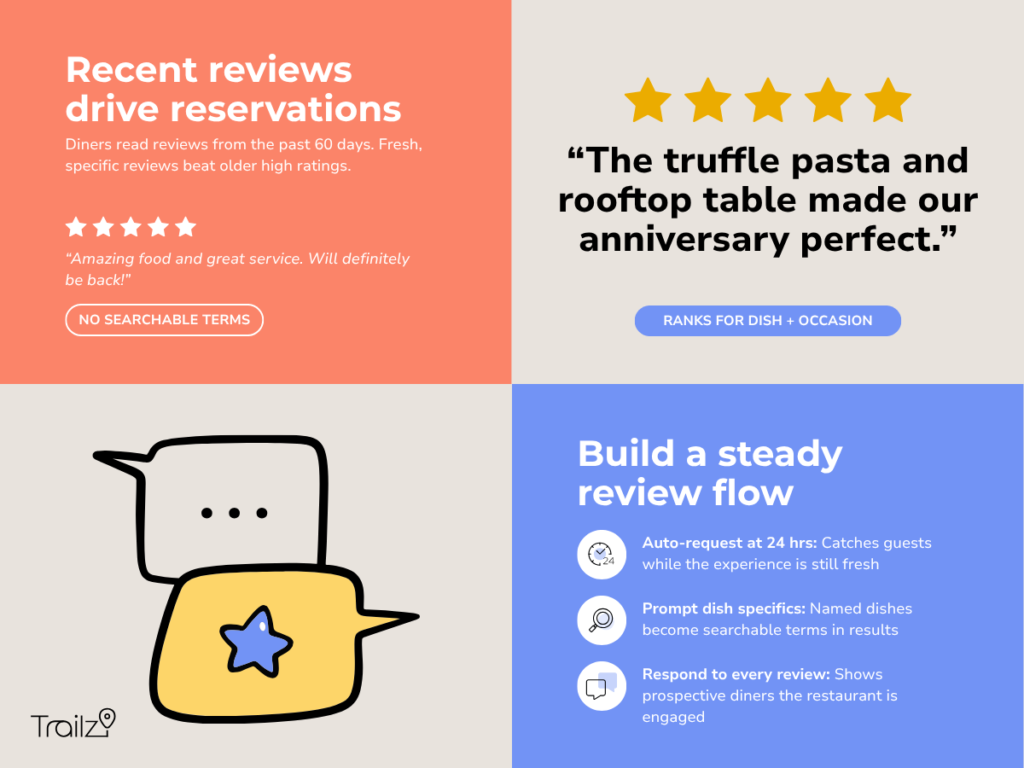
Diners often skim past older reviews and focus on the past 60 days before deciding where to eat. A restaurant with 4.4 stars and 80 recent reviews gets more reservations than one with 4.6 stars and older feedback.
Automated review requests sent 24 hours after dining reach guests while the experience is fresh. When reviewers mention specific dishes or service details, those phrases become searchable terms. Responding to every review shows prospective diners that the team is engaged.
What Retention Systems Fill Weeknight Tables?
Restaurants that fill Monday and Tuesday tables use automated systems instead of running more ads:
- SMS loyalty programs send “Members only: $5 appetizers tonight” at 3 pm when people plan dinner
- Email campaigns reaching guests who haven’t visited in 60 days with personalized offers
- Happy hour promotions targeted to office workers within two miles
- Special event announcements for slower nights
These campaigns aren’t occasional promotions. They’re automated systems that consistently bring people in during off-peak hours. A Tuesday afternoon text to a few hundred loyalty members tends to fill more tables than a weekend ad ever will.
How Do Local Visibility and Customer Retention Work Together?
Google ranks restaurants that demonstrate activity and local presence. But rankings alone don’t fill empty weeknight tables. The most effective strategy pairs local search visibility with retention systems that keep your restaurant in mind when people decide where to eat tonight.