Video marketing helps e-commerce businesses boost product visibility, build buyer trust, and drive higher conversions across search and social platforms.
Product photos alone rarely close the sale anymore. Video shows shoppers what static images can’t. That is how a product actually looks, moves, and fits into real life. For smaller e-commerce brands going up against bigger online retailers, video is one of the few places where personality and authenticity beat scale.
Why video converts better than static product pages
A 30-second clip of a product in use tells a shopper more than ten photos, and the decision happens faster. Pages with video also tend to hold visitors longer, which feeds positive engagement signals back to Google.
What works on a product page:
- Short demo clips showing real use, not staged studio shots
- Close-ups of materials, textures, or finishes
- Customer testimonials (even ones recorded on a phone)
- Unboxing or first-impression clips that mirror what buyers do anyway
A local e-commerce brand has the edge here. Filming a quick demo at the shop or workspace gives the content a sense of place that big-box online retailers can’t replicate.
What kinds of video should an e-commerce business prioritize?
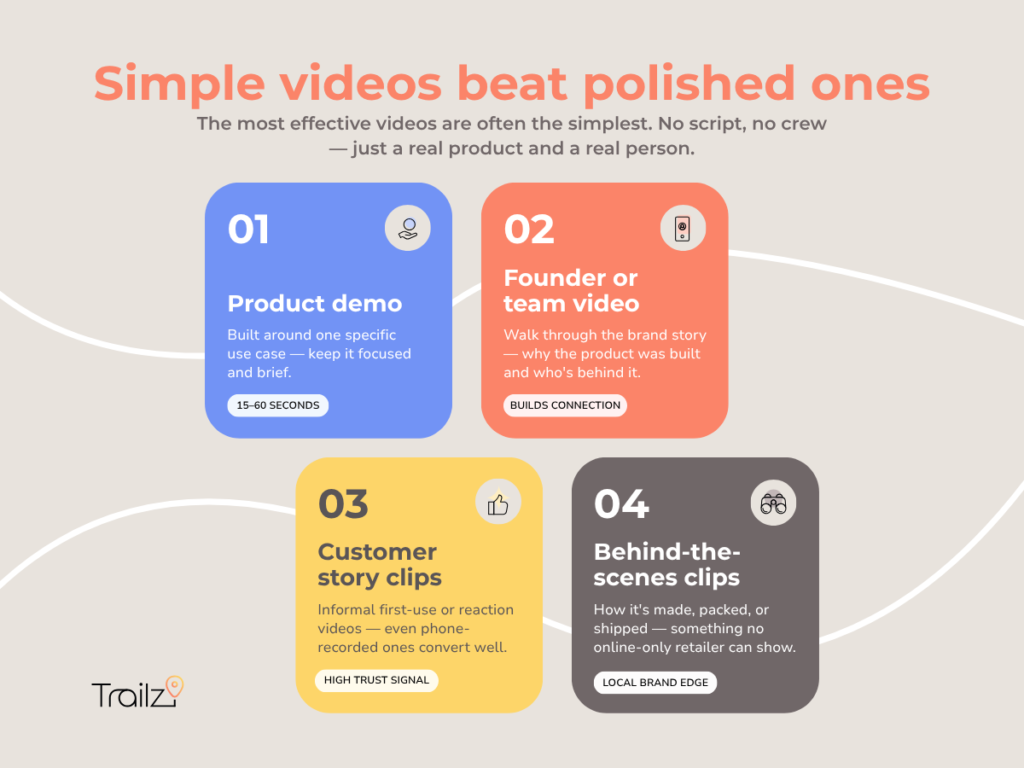
Not every video needs a script, a studio, or a crew. The videos that are most effective at convincing potential buyers tend to be the simplest. These could be a video of the founder explaining why they built the product, a customer using it for the first time, or a side-by-side of two options.
The formats worth focusing on:
- Product demos, 15 to 60 seconds, built around one specific use case
- Founder or team videos that walk through the brand story
- Customer story videos, even informal ones
- Behind-the-scenes clips of how the product is made, packed, or shipped
Polished commercial-style videos usually underperform lightly edited ones, especially for local e-commerce brands where customers want to feel a real connection to the business.
How does video impact e-commerce SEO?
Pages with embedded video are more likely to land in Google’s video carousel, and YouTube itself functions as the second-largest search engine. That gives e-commerce brands a second discovery channel beyond standard search. Transcripts, clear titles, and proper schema markup help search engines understand what each video covers.
For local e-commerce, video shared through Google Business Profile posts and tagged with location-specific keywords adds a ranking layer that pure-play online retailers usually skip.
Video gives smaller e-commerce businesses a way to compete on connection, not just price.